 Greenhouse Experts since 1991
 Organic Plants and Fertilizers
 Open 7 days a week
 Huge Range of Indoor and Outdoor Plants
 Amazing Gift Department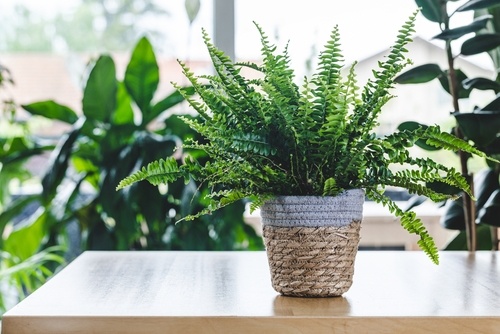
Ferns can make beautiful indoor plants, but they have a reputation for being difficult to care for. If you've suffered from watching your favourite fern shrivel up and die for no apparent reason, read on to find out how to care for indoor ferns.
Where to Grow Ferns Indoors
Indoor ferns like bright but indirect light, a humid atmosphere, and consistently moist compost. The bathroom is often ideal for ferns, but they can be grown in various environments, provided you choose the suitable fern. Plant ferns in a terrarium or under a cloche to create a humid climate. If you have several ferns, group them together to create a microclimate with higher humidity. Placing plant pots on drip trays filled with pebbles and topped up with water also helps raise the humidity around the plants. Make sure the pot sits above the water level to drain the compost still.
Tips on Caring for Indoor Ferns
- Ferns hate drying out, so it's essential to keep the moisture level in the compost constant. If you forget to water your plants, invest in ceramic watering spikes. Pressed into the compost and attached to a water-filled reservoir, they will provide a constant supply of water to your ferns.
- Place a decorative mulch such as pebbles on top of the compost to retain moisture.
- Use glazed or plastic pots, as these don't dry out as fast as terracotta pots do.
Ferns to Grow as Houseplants
There's a wide range of ferns that can be grown as indoor plants. Here are some of the most popular:
- Birds nest fern (Asplenium nidus): One of the easier ferns to grow indoors, with long, sculptural, wavy-edged fronds. A shaded location with indirect light is ideal for this fern, such as north or east-facing window. Water the compost around the plant, not the leaves, and don't let water sit in the plant's crown as it is likely to rot. Feed occasionally from spring to autumn with a dilute liquid houseplant feed.
- Blue star fern (Phebodium aureum' Blue Star): A very undemanding fern with long blue-green fronds on slender stems. It will cope better than most ferns with underwatering but hates overwatering.
- Asparagus fern (Asparagus densiflorus and Asparagus setaceus): Although they look like ferns with their delicate frondy foliage, these plants are related to asparagus. (They aren't edible, though.). Asparagus ferns like indirect light, some humidity, and regular watering. Watch out for the thorns on the mature stems!
- Maidenhair fern (Adiantum pedatum): A fern for those who like a challenge. It absolutely must have a humid atmosphere, so grow it in a bathroom or place the pot on a pebble tray. Never let the compost dry out, or your maidenhair fern will crisp up and die.
We have a great range of ferns and other indoor plants to green up your home, so come and visit our centre today!