 Greenhouse Experts since 1991
 Organic Plants and Fertilizers
 Open 7 days a week
 Huge Range of Indoor and Outdoor Plants
 Amazing Gift Department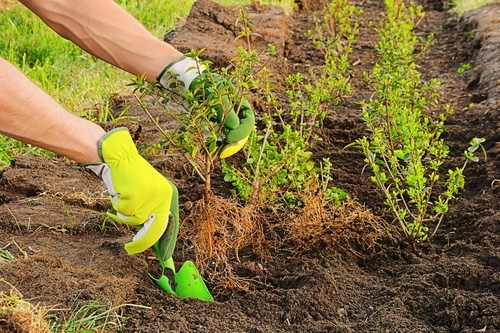
What are bare-root plants? The clue’s in the name – they’re plants sold with their roots bare of soil. These plants have been grown in open ground in a nursery and are dug up for sale between autumn and spring while they are dormant. In winter, many shrubs, roses, fruit trees, and ornamental trees are sold as bare-root plants. Bare-root plants are often much cheaper than container-grown plants. They’re a good option for hedging or big planting schemes.
Tips on Planting Bare-Root Plants
Because they’re planted while dormant, bare-root plants usually establish well, provided you remember these tips:
- Don’t let the roots dry out before planting. If you can’t plant straight away, put the plants somewhere cool and dark with their roots wrapped in damp newspaper. If it’s going to be longer than a few days (for example, if the ground is frozen), plant them temporarily in a bucket filled with moist compost.
- Soak the roots of your plants in a bucket of water for an hour or so before planting to rehydrate them.
- When planting, dig a big enough hole so that the roots can spread out comfortably. Check the soil mark on the plant’s trunk to make sure the plant is at the same height in the ground as it was in the nursery.
Five Popular Bare-Root Plants
There’s a wide range of shrubs and trees available as bare-root plants. Here are five of the most popular:
- Beech (Fagus sylvatica) – this familiar tree can also be grown as a traditional hedge plant in a wide range of soil conditions except for damp soils. If trimmed at the right time of year (late summer), it will retain its old leaves even after they have turned brown in autumn, only losing them when the new leaves appear in spring.
- Hornbeam (Carpinus betulus) – another hedging plant very similar to beech, with darker brown leaves in winter. It doesn’t keep its old leaves through winter as well as beech does but will grow better than beech in damp soils and grows in sun or part shade.
- Yew (Taxus baccata) – an evergreen conifer that also makes a good hedging plant, being one of the few conifers that will grow back when hard pruned into old wood. Once established, it will cope with dry shade, and the red berries are popular with birds (although poisonous to humans).
- Field maple (Acer campestre) – a small deciduous tree with maple-shaped leaves that turn a beautiful buttery yellow in autumn. It is fast-growing and copes well with most soil conditions. It also works well as a hedging plant.
- Privet (Ligustrum ovalifolium) – this popular shrub is evergreen except in very cold winters. It can be trimmed to form a hedge or grown as a shrub, producing clusters of scented white flowers in summer that are very popular with pollinators.
If you need advice on planting trees and shrubs, visit our centre where our friendly staff are always happy to advise you!